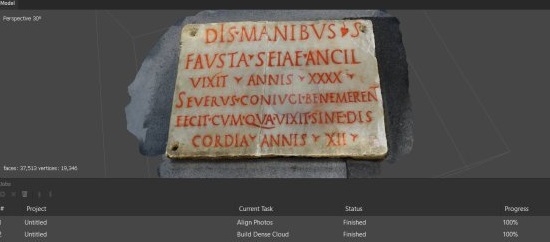
Now that we're well into 2019, some of the events connected to my AHRC fellowship are beginning to take shape. The first of these is the Workshop on Digital and Practical Epigraphy taking place 29th April - 4th May, and generously co-hosted by Gabriel Bodard and the ICS. The aim of this workshop is to... Continue Reading →
What links a drinking cup, Julius Caesar and ancient multilingualism?
Today I've been working on a piece on very short inscriptions - so short that we're not even sure what language they are in. There are some obvious reasons why very short, abbreviated inscriptions are sometimes used. On a coin or a tile stamp, space can be so limited that an abbreviation of the name... Continue Reading →
A cathedral field trip
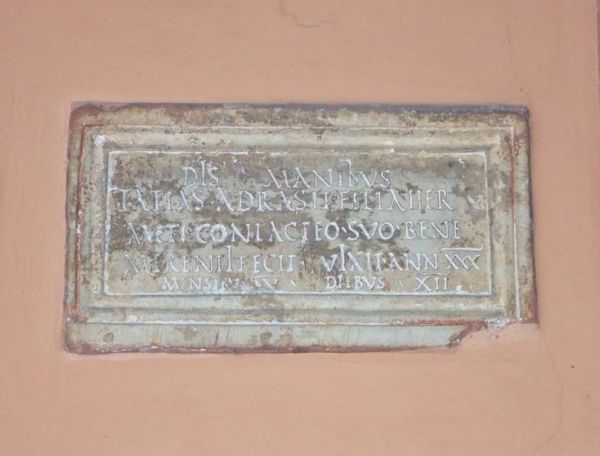
One of my academic specialisms is the study of inscriptions, otherwise known as epigraphy. Most of the material I work with is epigraphic, and sometimes this is one of the biggest challenges in my work. Learning how to read inscriptions is a skill that you need to learn by trial-and-error and, ideally, by having someone with... Continue Reading →
Nurses and “milk-buddies” in Roman epitaphs
One of my favourite things about the Roman death course I'm teaching this year is that every week teaches me something I never knew before. A few weeks ago, while I was translating some epitaphs to use in a lecture, a particular word caught my eye. The inscription ran: Rottio hic sit[us es]t iuve/nili robore... Continue Reading →
New Digital Research Tools 2
Over a year ago, I posted about some new digital research tools I'd been trying out, and which of them had worked/not worked for me. I've been meaning to write an update to this for a while because, actually, I've changed my mind quite a bit since then. So here's New Digital Research Tools 2... Continue Reading →
Reitia on the CREWS blog
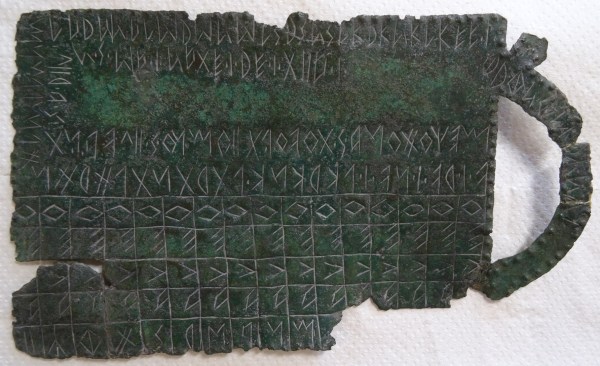
I'm really pleased that Venetic and the goddess Reitia have been included on the CREWS project blog. Many thanks to Pippa Steele for writing this post, making such good use of my photos (and Anna's delicious cake). As Pippa points out, Venetic gives us lots of important and unparalleled evidence for how people learned to... Continue Reading →
Moving Romans
Around the time of the EU referendum, I wrote a review of Moving Romans: Migration to Rome in the Principate by Laurens E. Tacoma. Ancient migration has been very prominent in my work recently: the Greek in Italy project just hosted a conference on ancient migration and mobility in May this year, and this book helped... Continue Reading →
Join the Greek in Italy team – postdoc opportunity
The Greek in Italy project is advertising for a new fixed-term post doctoral research associate. I've worked on the project for the last three years, and it is a fantastic team to be a part of! You can find the details of the ad below. Please get in touch if you have any questions about the... Continue Reading →
Exchange in the Mediterranean
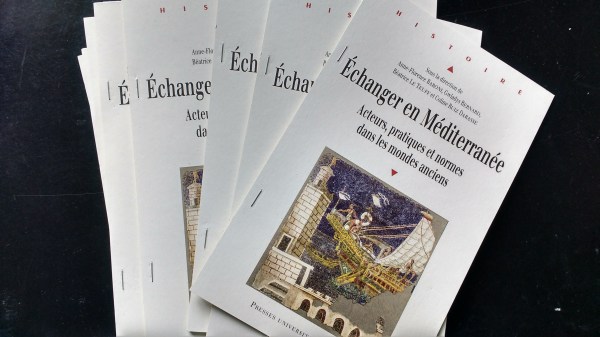
The new book Échanger en Méditerranée: Acteurs, pratiques et normes dans les mondes anciens turned up in my pigeon hole this week - and I'm thrilled to see it in physical form at last! I was also sent some beautifully produced physical off-prints of my chapter - I haven't seen one of them in ages, and they look... Continue Reading →
Sicily – Culture, Conquest and Battering Rams
Last week I enjoyed a nice afternoon off, checking out the British Museum's "Sicily: Culture and Conquest". I highly recommend it - the displays are fascinating, though somewhat crowded (as always). The exhibition focusses mainly on the Greek and Norman periods of Sicilian history, so go with that in mind if you're expecting lots of... Continue Reading →