This week I was excited to see the release of the first film by new company Barefaced Greek - and even more excited to see that the film was the opening speech of Aeschylus' Agamemnon. In their own words, Barefaced Greek is "a new initiative to create digital educational resources for the study of Classics and... Continue Reading →
Blog
Books for 2017
This time last year, I set myself a reading challenge for 2016. My goal was to expand my horizons a bit, and discover authors and genres I might otherwise miss out on. You can see the original challenge list here - I think over all I did well, both in covering the items on the... Continue Reading →
Happy end-of-term!
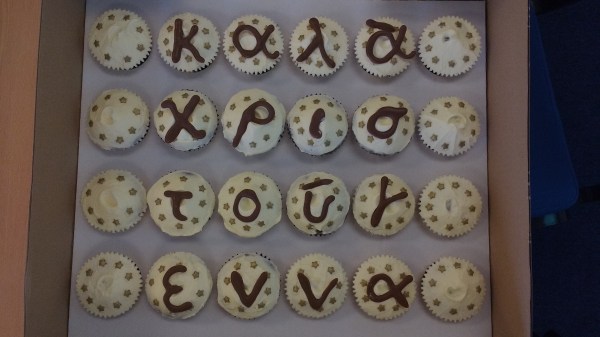
It's the end of the last week of term here in Exeter, and we've had a whole host of fun end-of-term things: the Classics Christmas Ball run by the Classics Society, a staff Christmas party, and a Christmas quiz with my third-year linguists (with impressive Greek-themed baking, pictured below - many thanks to Abi!). I've... Continue Reading →
New Resource: Questions for Academic Job Interviews
It's (just about) getting to the time of year when people are having job interviews for next academic year. I've had a few interviews over the past few years, some successful and some not, but I always found the best resources for interview preparation online. The most important thing (I think) is planning answers to... Continue Reading →
Review: Harry Potter and the Classical World
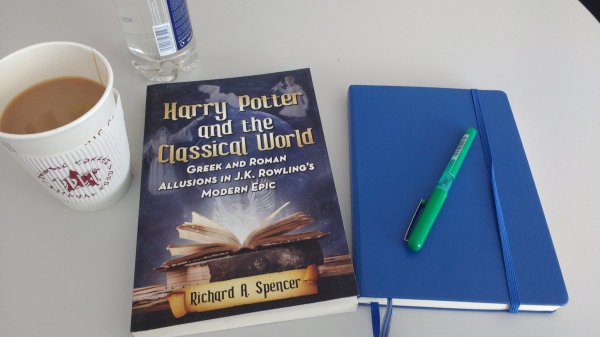
My review of Harry Potter and the Classical World by Richard A. Spencer is now online at the Classics for All online reading room. As you can tell from the review, I enjoyed this book great deal! It goes into an incredible amount of detail about the Classical allusions in the Harry Potter series - perhaps... Continue Reading →
Arrival – Linguists save the earth
Language is a problem for sci-fi. In any story involving contact with alien peoples or human civilisations from the distant future, there has to be a mechanism for understanding what everyone else is talking about, or most plots will never get off the ground. In Star Trek, you have the linguist Uhura, who has already presumably put... Continue Reading →
Nurses and “milk-buddies” in Roman epitaphs
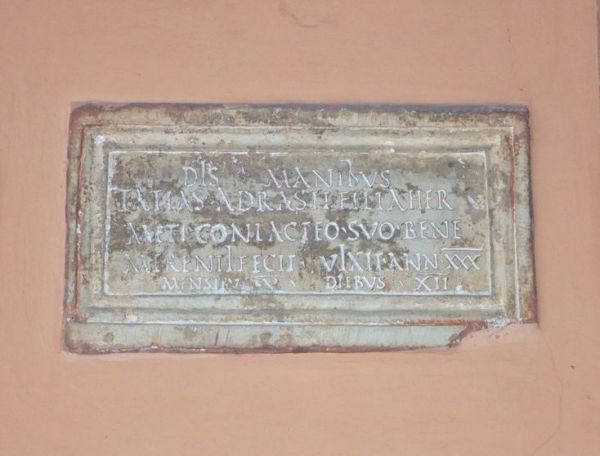
One of my favourite things about the Roman death course I'm teaching this year is that every week teaches me something I never knew before. A few weeks ago, while I was translating some epitaphs to use in a lecture, a particular word caught my eye. The inscription ran: Rottio hic sit[us es]t iuve/nili robore... Continue Reading →
How I plan
I didn't mean to make this a week of "How-To" blog posts, but somehow it has become one! Soon after I published my post "How I Write a Lecture", Ellie Mackin posted my contribution to her "How I Plan" series of interviews. If you want to know how I plan my research, you can read... Continue Reading →
How I write a lecture
This term has involved a lot of lecture writing for me. Planning, writing and teaching two brand-new courses at the same time has been brilliant fun so far, but also lots of work. Talking to colleagues, I've realised that not all of us take the same approach to writing new courses - and talking to... Continue Reading →
Cambridge Greek Play 2016
As some of you know, I've been in the chorus of the Cambridge Greek Play a couple of times - in Agamemnon in 2010 and in Prometheus/Frogs 2013. I've also written before about putting together the Cambridge Greek Play online archive, which I did in the summer of 2015. This year, I had the unique experience of being... Continue Reading →