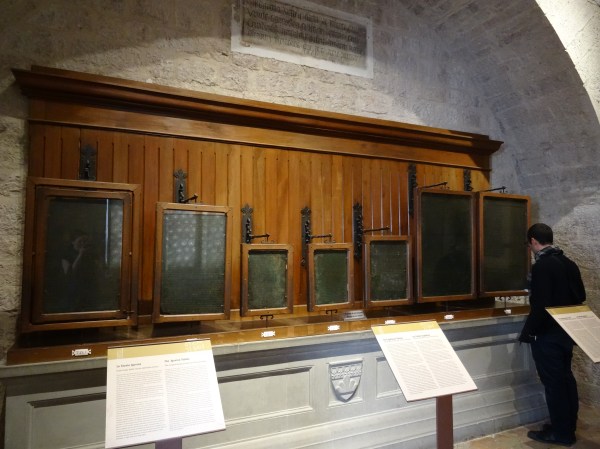
This Wednesday at 4.30 I'll be speaking about my new work at the Cambridge Indo-European Seminar, also known as the Philology and Linguistics Seminar. All are welcome, especially for a cup of tea at 4.15 and a drink in the pub afterwards. You can find the room details here. If you're interested, you can also download... Continue Reading →
Greek in Italy at the Festival of Ideas and the Fitzwilliam Museum
The Cambridge Festival of Ideas rolls around again this week, with lots of great events to get involved with, including a lot of events in the Classics Faculty. As always, the Greek in Italy project has made a couple of contributions. Geoff's talk "Did Language Matter? Local Versus Imperial Languages in Classical Antiquity" has already sold... Continue Reading →
The Mysterious Case of the 112-year-old Woman
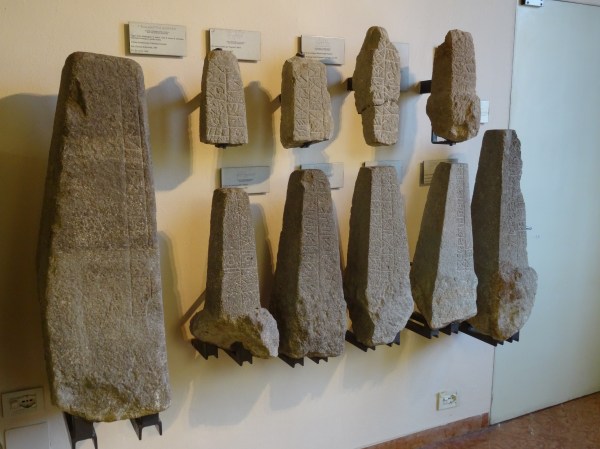
ahvdiú. ni. akun. CXII Ahvdio daughter of Ni. 112 years Oscan inscription on plaster. Teanum Sidicinum, c. 200 BC. Imagines Italicae: Teanum Sidicinum 24; Sabellische Texte: Po 51. People have struggled with Ahvdio's gravestone. On the one hand, the Roman numerals at the end of the inscription (on the left-hand-side of the picture) look quite... Continue Reading →
SLE Leiden 2015
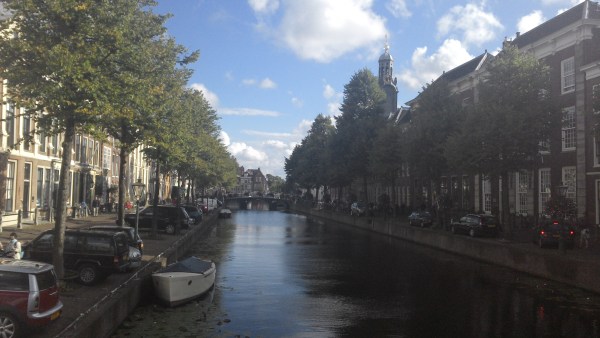
This week I'll be at the Societas Linguistica Europaea conference in Leiden. This is one of those huge international conferences with about fourteen parallel tracks - which is a shame in some ways, because it means that I can't possibly see everything. All the same, I'm excited about seeing (at least part of) the panels... Continue Reading →
Building a Corpus of Ancient Venetic
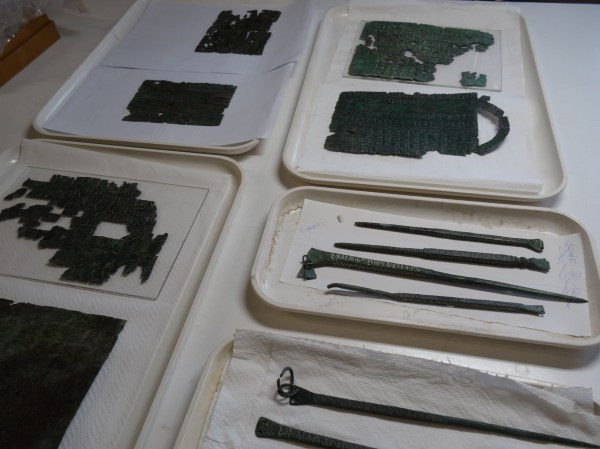
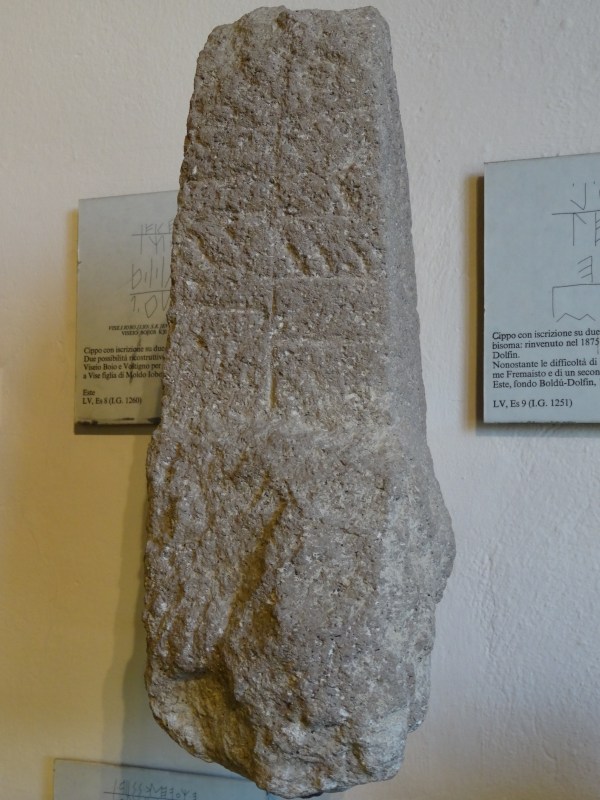
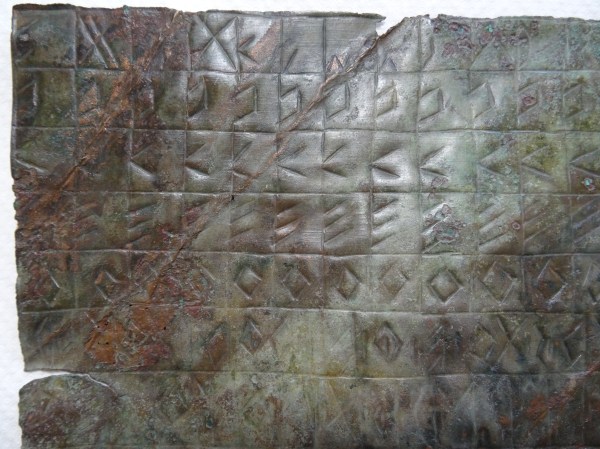
For the past few weeks I've been doing something which has been rewarding and frustrating in almost equal measure (in between some weekends visiting family in Sussex and Yorkshire, with some Roman sites and a grinning she-wolf thrown in): namely, building up a complete corpus of all the extant inscriptions in the ancient Venetic language.... Continue Reading →
A 2500-Year-Old Tribute to a Lost Friend
ego vhontei ersiniioi vineti karis vivoi oliialekve murtuvoi atisteit I (am a grave) for Fonts Ersinios (He was) Vinetos's friend. He (Vinetos?) sets (me) up for (him), whether alive or dead. (Venetic inscription on stone. Este, Italy. c. 500-475 BC. M. Lejeune "Manuel de la Langue Vénète", #75 ter) I was very struck by this inscription the first... Continue Reading →
Words for “alphabet” in ancient languages
I remember when I first realised that the English word "alphabet" came from the first two letters of the Greek alphabet - alpha and beta - and somehow I felt like I'd cracked a kind of etymological code. But the list of brilliant names for alphabet terms just goes on. The word "alphabet" is of... Continue Reading →
From Neapolis to Calimera (aka Greek in Italy goes to Italy)
Last week was our second "Greek in Italy" project trip to the south of Italy. Like our last trip in September 2014, I'm sure that pictures and thoughts from this trip will keep bubbling up in my blog posts and articles for quite some time. But even though we've only just got back and I've... Continue Reading →
Umbrian in Tolstoy
My holiday reading this year was Tolstoy's Anna Karenina, which I had been meaning to read for a while. For the first three hundred pages, it was a total escape from work - but then what should pop up in Part III but a reference to Umbrian: Alexei Alexandrovich ordered tea to be served in... Continue Reading →
A Stone Talking to Itself
pis: tiú: íív: kúrú: púiiu: baíteís: aadiieís: ahfineís: Who are you? I am a stone. Whose? Baitis Aadiis Afinis's. (Oscan inscription on stone. Altilia, Italy. c. 150-90 BC. Imagines Italicae: Saepinum 2, Sabellische Texte: Sa 31) It's not often that I'm tempted to describe an inscription as "cute", but I've always found this short Oscan... Continue Reading →