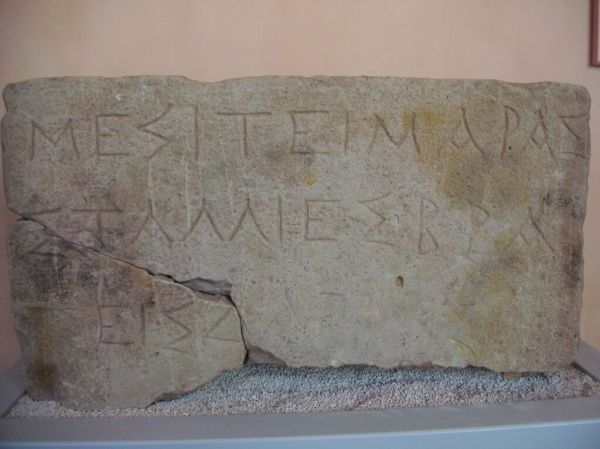
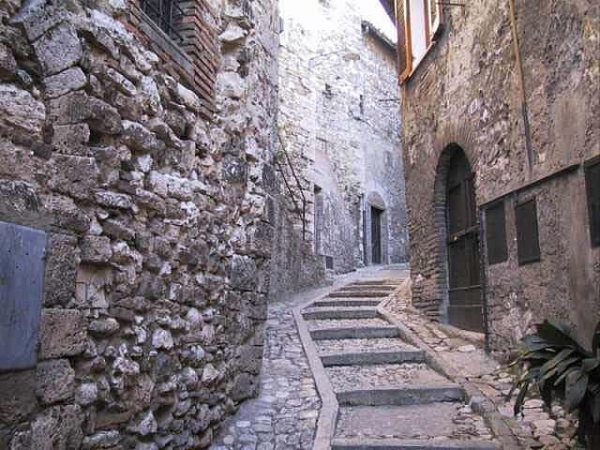
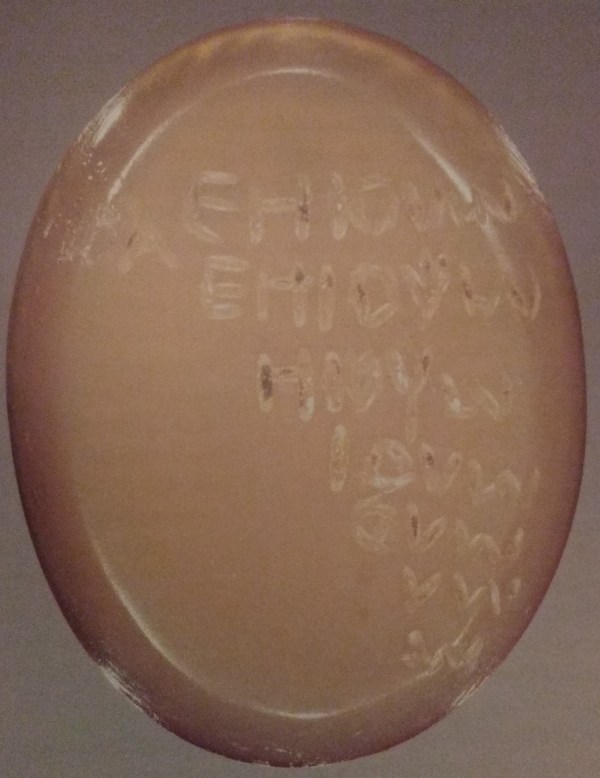
μεfιτει μαρασ σταλλιεσ βρα τεισ δατ[α]σ To Mefitis, Maras Stallies, for grace given Oscan inscription in the Greek alphabet. Rossano di Vaglio, 325-275 BC. Imagines Italicae: Potentia 13; Sabellische Texte Lu 16. This is an inscription on stone, found at the sanctuary site of Rossano di Vaglio (pictured below) in central Lucania, modern day... Continue Reading →
Blog
Songs about Pompeii
Most of you are probably familiar with the song "Pompeii", released by Bastille in 2013. A few weeks ago, Rachele De Felice sent me this link, of a rather nice Latin translation of the song. https://www.youtube.com/watch?v=VG_9Lw_6UrU She expressed some disappointment that the song had not been translated into Oscan, as the more ancient language of... Continue Reading →
So where is Narnia?
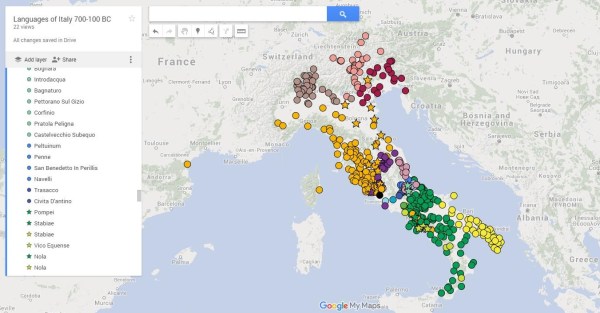
I'm still working away at my maps of the languages of ancient Italy. Going through all the examples of Greek inscriptions from Italy in the SEG, I found one from Narnia. I'd come across the ancient city of Narnia (modern-day Narni) when I was writing my book, and then kind of forgotten about it until this... Continue Reading →
From Oscan hirpus to English hearse
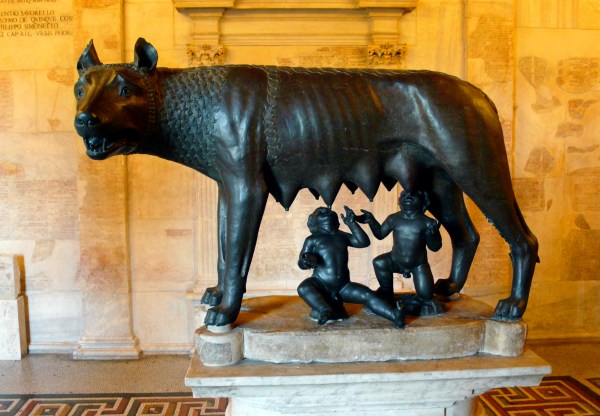
Myriapod Productions have released a rather lovely video in their "Mysteries of Vernacular" series tracing the etymology of the English word hearse back to the Oscan word hirpus, 'wolf'. (This was discovered and sent to me by my friend Julia, so many thanks to her! I have included some pictures of coins below, because she likes coins.) This... Continue Reading →
The Women’s Classical Committee UK
Over the past few months, I've been involved with the formation of the Women's Classical Committee UK. There's been an organisation for women in Classics in the US for a long time (the Women's Classical Caucus), and there's also an equivalent organisation in Australia and New Zealand. So when Liz Gloyn (among others) suggested a... Continue Reading →
Mapping Language Contact – Phase 1
It's become a bit of a cliche for me that my academic talks tend to start with a map of the languages of Italy, followed by an explanation of why the map is dangerously misleading. The map that I normally use is from Wikipedia, and looks like this: Now, this map does the job in... Continue Reading →
Vanishing names on healing amulets
I'm reviewing a book this week called Vanishing Acts On Ancient Greek Amulets by Christopher A. Faraone. It's a short monograph that's incredibly rich in detail, using magical amulets in Greek, Latin and other languages to trace developments in how healing spells were spoken and written from the first century to the sixth century AD. In particular,... Continue Reading →
Four footprints, two languages, one tile
hn. sattiieis. detfri segnatted. plavtad herennis. amica signauit. qando. a- ponebamus. tegila(m) Detfri of Hn. Sattis signed with a footprint. Amica of Herens signed when we were laying out the tile. Oscan/Latin inscription and four shoe prints on a large clay roof tile (0.67 x 0.94m). Pietrabbondante, c. 100 BC. Imagines Italicae: Teruentum 25;... Continue Reading →
My 2015 in review
I'm following the lead of the excellent Liz Gloyn and Ellie Mackin and looking back over the past year. It's all too easy to forget all the achievements and milestones of the past year - when I was a PhD student I was encouraged to write a list of everything I'd done at the end of... Continue Reading →
Reading challenge for 2016
A Boxing Day walk, Petworth I'm having a lovely Christmas break with family this week, and going on lots of Sussex walks (exhibit A above). And I've had plenty of space to think about the coming year. I'm not a resolutions person exactly, but I like having some ideas about what I'd like to... Continue Reading →