This Wednesday at 4.30 I'll be speaking about my new work at the Cambridge Indo-European Seminar, also known as the Philology and Linguistics Seminar. All are welcome, especially for a cup of tea at 4.15 and a drink in the pub afterwards. You can find the room details here. If you're interested, you can also download... Continue Reading →
Blog
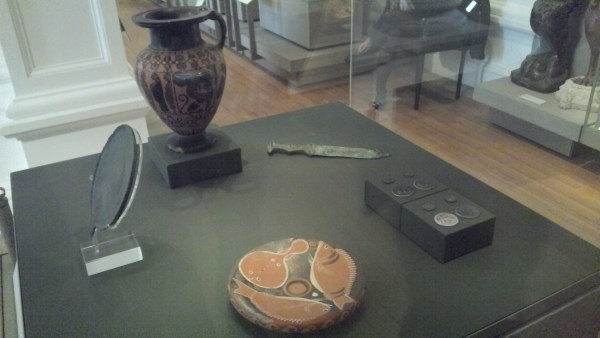
Greek in Italy at the Festival of Ideas and the Fitzwilliam Museum
The Cambridge Festival of Ideas rolls around again this week, with lots of great events to get involved with, including a lot of events in the Classics Faculty. As always, the Greek in Italy project has made a couple of contributions. Geoff's talk "Did Language Matter? Local Versus Imperial Languages in Classical Antiquity" has already sold... Continue Reading →
Classics, archaeology and linguistics themed cakes to celebrate the Bake Off Final
I'm not a skilled baker myself, but I highly appreciate baking excellence in others, particularly in the form of the Great British Bake Off. Tonight is, of course, this year's final (I'll be cheering for Nadiya), so it seems the perfect opportunity to plug some of my favourite Classics, archaeology and linguistics themed show-stoppers. Firstly... Continue Reading →
Reblogged: Samnites in Pompeii
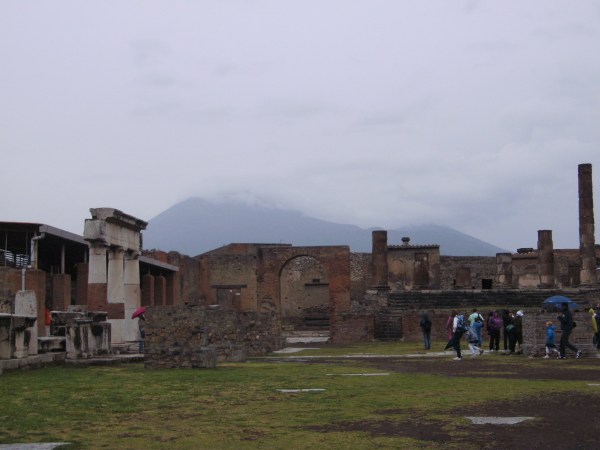
A great post here on the new Samnite grave in Pompeii by Virginia L. Campbell. She's also posted about the Oscan epigraphy of Pompeii here. A new discovery at Pompeii is always an exciting event, and even more so when it's from the 'Samnite' period of the town rather than its final destruction. I'm looking... Continue Reading →
“Oscan in Southern Italy and Sicily” is out this week
I'm very excited to announce the publication of my book Oscan in Southern Italy and Sicily. The editor very kindly dropped the first copy round to my house last night, and I'm really pleased with how it has turned out. This book started life as my PhD thesis (pictures of its journey from thesis to book... Continue Reading →
Why do some Greek and Latin words mean (almost) the opposite in English?
As a learner of Greek or Latin, you are sometimes confronted by words that seem to have obvious counterparts in English - and most of the time, that's very helpful. English has borrowed lots from the ancient languages, particularly from Latin (often via French). Sometimes a word means exactly what it should in a weird... Continue Reading →
The Mysterious Case of the 112-year-old Woman
ahvdiú. ni. akun. CXII Ahvdio daughter of Ni. 112 years Oscan inscription on plaster. Teanum Sidicinum, c. 200 BC. Imagines Italicae: Teanum Sidicinum 24; Sabellische Texte: Po 51. People have struggled with Ahvdio's gravestone. On the one hand, the Roman numerals at the end of the inscription (on the left-hand-side of the picture) look quite... Continue Reading →
SLE Leiden 2015
This week I'll be at the Societas Linguistica Europaea conference in Leiden. This is one of those huge international conferences with about fourteen parallel tracks - which is a shame in some ways, because it means that I can't possibly see everything. All the same, I'm excited about seeing (at least part of) the panels... Continue Reading →
Oxbridge JRF Applications – A Brief How-To
Application season for the Oxbridge JRFs has just rolled around (in fact, the first deadline, Trinity, seems to be on Friday, so this post is a little late). A common complaint about these jobs is that their application procedure is difficult to access and poorly explained - and this complaint is often pretty fair. In... Continue Reading →
Building a Corpus of Ancient Venetic
For the past few weeks I've been doing something which has been rewarding and frustrating in almost equal measure (in between some weekends visiting family in Sussex and Yorkshire, with some Roman sites and a grinning she-wolf thrown in): namely, building up a complete corpus of all the extant inscriptions in the ancient Venetic language.... Continue Reading →