One of the most famous Greek tragedies is called Oedipus Rex. Well, sort of. Its original Greek title is Oidípous Týrannos, but usually everyone calls it by its Latin name. Even the English title Oedipus the King is heard much more rarely. And it's not just this play that's the problem. Ancient Greek plays are... Continue Reading →
Umbrian in Tolstoy
My holiday reading this year was Tolstoy's Anna Karenina, which I had been meaning to read for a while. For the first three hundred pages, it was a total escape from work - but then what should pop up in Part III but a reference to Umbrian: Alexei Alexandrovich ordered tea to be served in... Continue Reading →
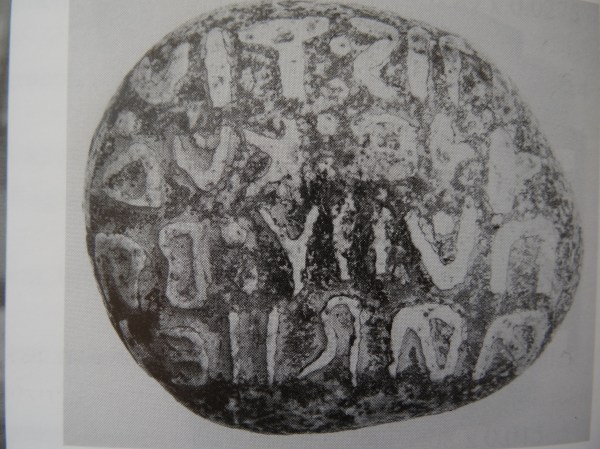
A Stone Talking to Itself
pis: tiú: íív: kúrú: púiiu: baíteís: aadiieís: ahfineís: Who are you? I am a stone. Whose? Baitis Aadiis Afinis's. (Oscan inscription on stone. Altilia, Italy. c. 150-90 BC. Imagines Italicae: Saepinum 2, Sabellische Texte: Sa 31) It's not often that I'm tempted to describe an inscription as "cute", but I've always found this short Oscan... Continue Reading →
Language and Society in the Greek and Roman Worlds
I've just finished reading James Clackson's new book Language and Society in the Greek and Roman Worlds - a book I will undoubtedly be adding to all my undergraduate reading lists before next term starts. The book offers an accessible but thorough introduction to the languages of the ancient world and how they were used across time and space -... Continue Reading →
A Linguist at the British School at Rome
From January to March 2015, I held a Rome Award at the British School at Rome. This was a fantastic opportunity, and I can't recommend it enough, especially to PhD students and Early Career Researchers. The BSR provides a perfect research environment for anyone interested in any period of Italy history, and all the sights (and... Continue Reading →
Two Latin words for elephant
There are two words for “elephant” in Latin, and both have to do with Greeks in Italy. The first one, elephantus (or sometimes elephas or elephans), is fairly straightforward. It’s used in Latin from about the second century BC, and it’s a borrowing of the Greek word ὁ ἐλέφας, –αντος. That’s the normal Greek word for both African and Indian elephants, and is... Continue Reading →