I'm not a skilled baker myself, but I highly appreciate baking excellence in others, particularly in the form of the Great British Bake Off. Tonight is, of course, this year's final (I'll be cheering for Nadiya), so it seems the perfect opportunity to plug some of my favourite Classics, archaeology and linguistics themed show-stoppers. Firstly... Continue Reading →
Reblogged: Samnites in Pompeii
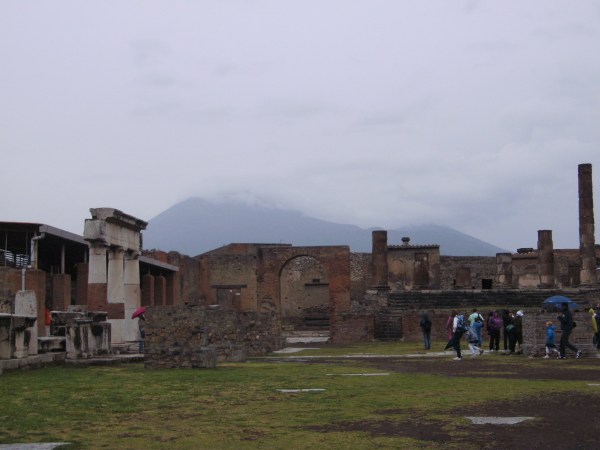
A great post here on the new Samnite grave in Pompeii by Virginia L. Campbell. She's also posted about the Oscan epigraphy of Pompeii here. A new discovery at Pompeii is always an exciting event, and even more so when it's from the 'Samnite' period of the town rather than its final destruction. I'm looking... Continue Reading →
“Oscan in Southern Italy and Sicily” is out this week
I'm very excited to announce the publication of my book Oscan in Southern Italy and Sicily. The editor very kindly dropped the first copy round to my house last night, and I'm really pleased with how it has turned out. This book started life as my PhD thesis (pictures of its journey from thesis to book... Continue Reading →
Why do some Greek and Latin words mean (almost) the opposite in English?
As a learner of Greek or Latin, you are sometimes confronted by words that seem to have obvious counterparts in English - and most of the time, that's very helpful. English has borrowed lots from the ancient languages, particularly from Latin (often via French). Sometimes a word means exactly what it should in a weird... Continue Reading →
The Mysterious Case of the 112-year-old Woman
ahvdiú. ni. akun. CXII Ahvdio daughter of Ni. 112 years Oscan inscription on plaster. Teanum Sidicinum, c. 200 BC. Imagines Italicae: Teanum Sidicinum 24; Sabellische Texte: Po 51. People have struggled with Ahvdio's gravestone. On the one hand, the Roman numerals at the end of the inscription (on the left-hand-side of the picture) look quite... Continue Reading →
Archiving the Cambridge Greek Play
The Cambridge Greek Play desperately needs a new website. Very soon, I'm pleased to say this website will become a reality, and I will certainly be plugging it and providing links when it launches. Fortunately, we are paying some highly talented and professional designers to construct the website itself, thanks to a donation reserved for... Continue Reading →
From Neapolis to Calimera (aka Greek in Italy goes to Italy)
Last week was our second "Greek in Italy" project trip to the south of Italy. Like our last trip in September 2014, I'm sure that pictures and thoughts from this trip will keep bubbling up in my blog posts and articles for quite some time. But even though we've only just got back and I've... Continue Reading →
Why Do Greek Plays have Latin Titles?
One of the most famous Greek tragedies is called Oedipus Rex. Well, sort of. Its original Greek title is Oidípous Týrannos, but usually everyone calls it by its Latin name. Even the English title Oedipus the King is heard much more rarely. And it's not just this play that's the problem. Ancient Greek plays are... Continue Reading →
Language and Society in the Greek and Roman Worlds
I've just finished reading James Clackson's new book Language and Society in the Greek and Roman Worlds - a book I will undoubtedly be adding to all my undergraduate reading lists before next term starts. The book offers an accessible but thorough introduction to the languages of the ancient world and how they were used across time and space -... Continue Reading →
A Linguist at the British School at Rome
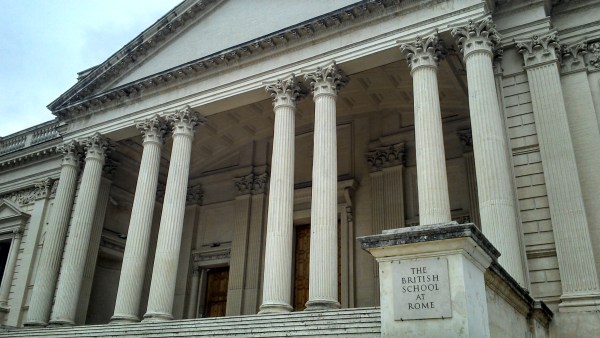
From January to March 2015, I held a Rome Award at the British School at Rome. This was a fantastic opportunity, and I can't recommend it enough, especially to PhD students and Early Career Researchers. The BSR provides a perfect research environment for anyone interested in any period of Italy history, and all the sights (and... Continue Reading →