Talk: Becoming Roman at Este and Padua

Tomorrow I'll be speaking at the Cambridge Philological Society, 4pm in the Old Senior Combination room at Trinity College. Tea, coffee and cake is provided - all welcome! My title is Competition and Identity in Venetic Funerary Epigraphy: Becoming Roman at Este and Padua. I'm very excited about this talk, as I'll be dealing with a... Continue Reading →

RAC/TRAC 2016 Update

I'm off to RAC/TRAC 2016 (the Roman Archaeology Conference and Theoretical Roman Archaeology Conference). There will be a bit of a break in my blogging, but lots of photos to share when I get back. My paper is in Greg Woolf's panel on standardisation tomorrow morning. You can preview my slides by downloading them here. If you're... Continue Reading →

Plautus and plavtad

Here's a nice post by Matteo Calabrese on the meaning behind the name of the Roman dramatist Plautus, with a reference back to the post I wrote on the Pietrabbondante tile in January. If you were wondering, his name is derived from a nickname meaning "flat-footed" - but as far as I know, we can... Continue Reading →

Dedication to Mefitis

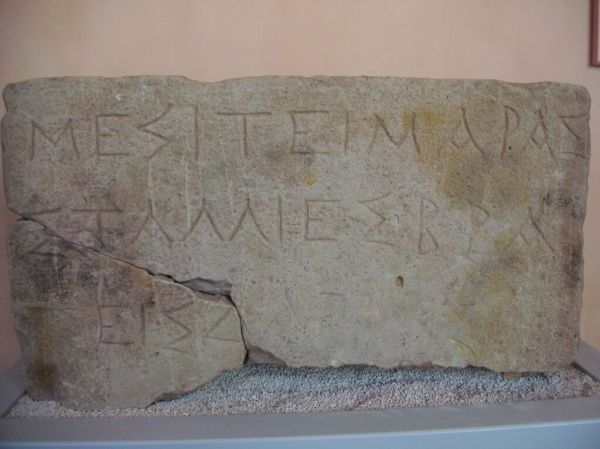
    μεfιτει μαρασ σταλλιεσ βρα τεισ δατ[α]σ To Mefitis, Maras Stallies, for grace given Oscan inscription in the Greek alphabet. Rossano di Vaglio, 325-275 BC. Imagines Italicae: Potentia 13; Sabellische Texte Lu 16. This is an inscription on stone, found at the sanctuary site of Rossano di Vaglio (pictured below) in central Lucania, modern day... Continue Reading →

From Oscan hirpus to English hearse

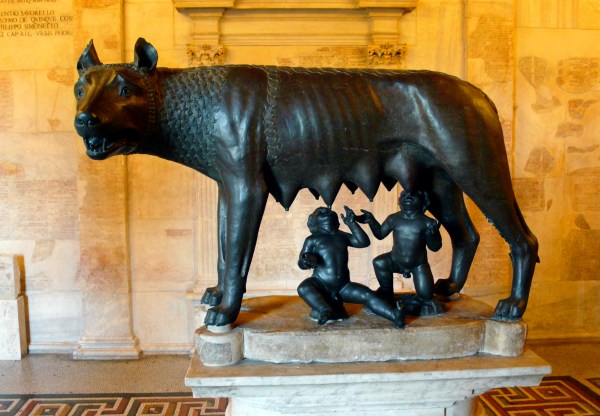
Myriapod Productions have released a rather lovely video in their "Mysteries of Vernacular" series tracing the etymology of the English word hearse back to the Oscan word hirpus, 'wolf'. (This was discovered and sent to me by my friend Julia, so many thanks to her! I have included some pictures of coins below, because she likes coins.) This... Continue Reading →

Vanishing names on healing amulets

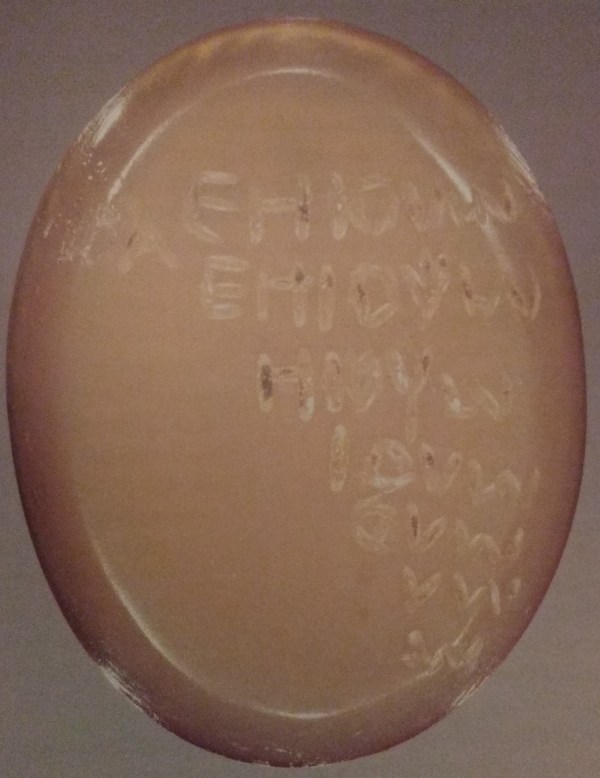
I'm reviewing a book this week called Vanishing Acts On Ancient Greek Amulets by Christopher A. Faraone. It's a short monograph that's incredibly rich in detail, using magical amulets in Greek, Latin and other languages to trace developments in how healing spells were spoken and written from the first century to the sixth century AD. In particular,... Continue Reading →

Four footprints, two languages, one tile

hn. sattiieis. detfri segnatted. plavtad herennis. amica signauit. qando. a- ponebamus. tegila(m)   Detfri of Hn. Sattis signed with a footprint. Amica of Herens signed when we were laying out the tile. Oscan/Latin inscription and four shoe prints on a large clay roof tile (0.67 x 0.94m). Pietrabbondante, c. 100 BC. Imagines Italicae: Teruentum 25;... Continue Reading →

Celtic and the Celts

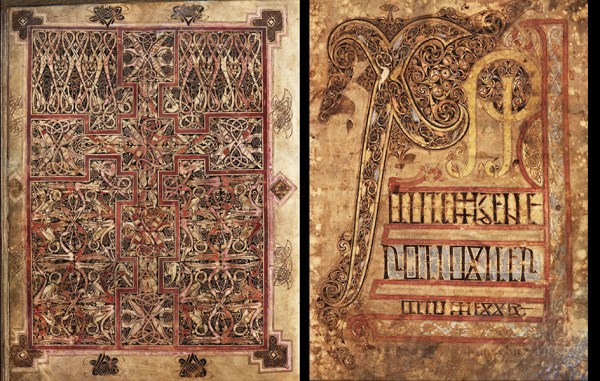
On Monday I finally got to see the British Museum's exhibit Celts: Art and Identity. It's a stunning collection, and if you can still get down to see it (or can see the re-jigged version when it transfers to the National Museum of Scotland), you should definitely catch it. Laura Cumming gives a great review here, with pictures... Continue Reading →

New book on fragmentary languages

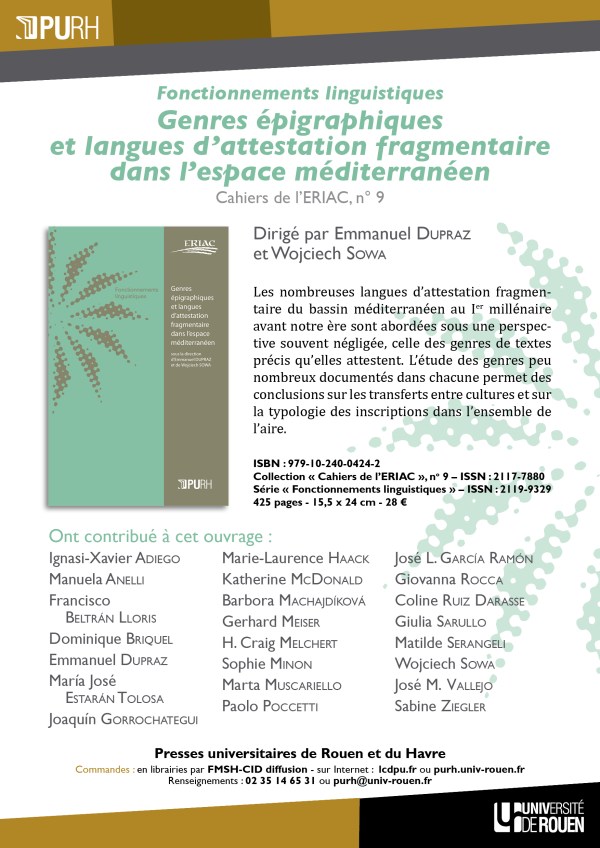
A new book  on fragmentary epigraphy (which includes a chapter written by me) is coming out today. Genres épigraphiques et langues d’attestation fragmentaire dans l’espace méditerranéen, edited by Emmanuel Dupraz and Wojciech Sowa, is a collection all about the many epigraphic languages of the ancient Mediterranean and the genres of text that are attested all across... Continue Reading →

Create a website or blog at WordPress.com

Up ↑