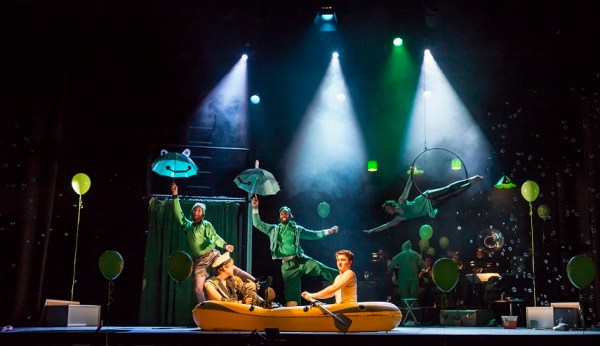
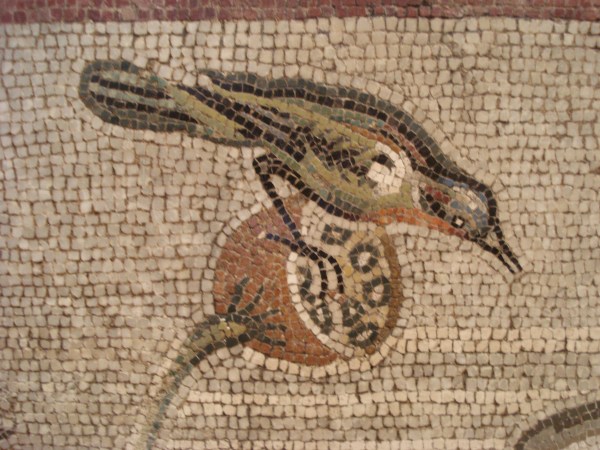
One of the most famous Greek tragedies is called Oedipus Rex. Well, sort of. Its original Greek title is Oidípous Týrannos, but usually everyone calls it by its Latin name. Even the English title Oedipus the King is heard much more rarely. And it's not just this play that's the problem. Ancient Greek plays are... Continue Reading →
Blog
Umbrian in Tolstoy
My holiday reading this year was Tolstoy's Anna Karenina, which I had been meaning to read for a while. For the first three hundred pages, it was a total escape from work - but then what should pop up in Part III but a reference to Umbrian: Alexei Alexandrovich ordered tea to be served in... Continue Reading →
A Stone Talking to Itself
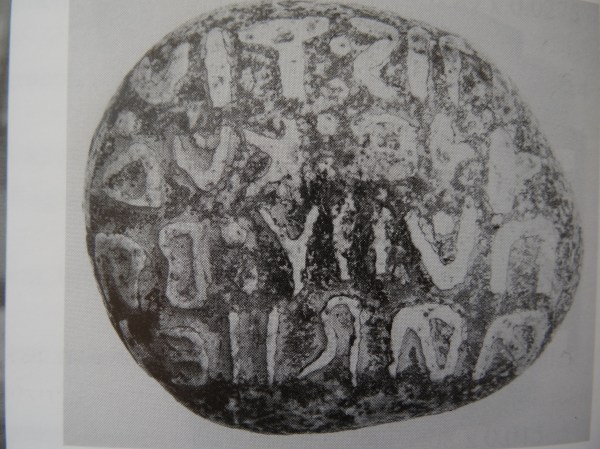
pis: tiú: íív: kúrú: púiiu: baíteís: aadiieís: ahfineís: Who are you? I am a stone. Whose? Baitis Aadiis Afinis's. (Oscan inscription on stone. Altilia, Italy. c. 150-90 BC. Imagines Italicae: Saepinum 2, Sabellische Texte: Sa 31) It's not often that I'm tempted to describe an inscription as "cute", but I've always found this short Oscan... Continue Reading →
What is the Latin for “to tweet”?
Earlier today I tweeted a quote from an article by the University Orator, Rupert Thompson, in our Faculty newsletter. The Orator gives speeches in Latin when honorary doctorates are conferred - and writing speeches in Latin to honour the work of particle physicists, Hollywood actors, and the like, is not always straightforward. It's an almost unique... Continue Reading →
Why Historians and Linguists Should Read the Ibis Trilogy
Historians and linguists of the world: you should be reading Amitav Ghosh's Ibis Trilogy - Sea of Poppies, River of Smoke, and the recently released Flood of Fire. (For those who have already started Flood of Fire, don't worry, there are no spoilers ahead.) I'm hoping the historians don't need too much convincing. Ghosh's trilogy... Continue Reading →
My Own Exam Howlers
Around this time of year, academics are breathing a sigh of relief that exams (and exam marking) are over. At about the same time, newspapers often invite people to send in their students' funniest "exam howlers". Rather than revealing their students' mistakes, academics on twitter have generously responded to this yearly demand for "howlers" by... Continue Reading →
New Digital Research Tools
This term, I've been caught between putting the very final touches to my book and getting stuck into a new project. The beginning of a new research project always seems like a good time to re-evaluate how I've been working, and to investigate what new (or not so new) digital tools are out there that might make... Continue Reading →
Language and Society in the Greek and Roman Worlds
I've just finished reading James Clackson's new book Language and Society in the Greek and Roman Worlds - a book I will undoubtedly be adding to all my undergraduate reading lists before next term starts. The book offers an accessible but thorough introduction to the languages of the ancient world and how they were used across time and space -... Continue Reading →
Stationery in Action – City Notebooks
Like many academics, I have a thing for stationery. When you spend so much of your life reading and writing, getting the tools of your craft right become really important. For me, it comes down to a few basic requirements: I don't want my stationery to be inconvenient or distracting to use, I want to... Continue Reading →
Urgent – Don’t Privatise the Central Library
If you live in Cambridge, you might have been aware of a petition to stop the privatisation of the top floor of the Central Library. This would involve turning part of the library that is currently free to all into a paid-for space. To quote from the petition: Cambridge Central Library is one of the... Continue Reading →