Back in March, I asked many of you to fill in a survey for my PCAP essay on casualisation and employment in Classics in the UK. I'm pleased to say that an expanded version of this report has been published by the Council of UK Classics Departments Bulletin. It can be found online here. Please feel... Continue Reading →
Blog
Reblogged: The epigraphic gallery of the Museo Archeologico Nazionale in Naples is now open!
This recent post by my 'Greek in Italy' colleague Nick Zair shares the (very exciting!) news that the epigraphy room of the Museo Archeologico Nazionale is open for business again. To give some context to this, I've visited this room about three times. The first time was in 2009, when I was told it was closed... Continue Reading →
What links a drinking cup, Julius Caesar and ancient multilingualism?
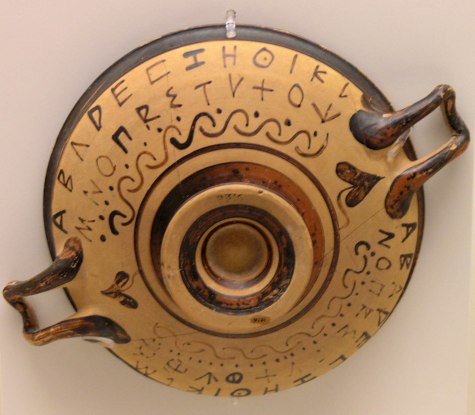
Today I've been working on a piece on very short inscriptions - so short that we're not even sure what language they are in. There are some obvious reasons why very short, abbreviated inscriptions are sometimes used. On a coin or a tile stamp, space can be so limited that an abbreviation of the name... Continue Reading →
My PCAP bibliography
Fellowship (or associate fellowship) of the Higher Education Authority is now a requirement for many people working in higher education. I've done two applications to the HEA over the past two years - last year, to be accredited as an Associate Fellow through a Cambridge programme called TAP, and then this year to get a... Continue Reading →
How I draw inscriptions
First of all - happy second birthday, blog! The blog is now regularly getting 2000 readers a month which - let's be honest - is a lot more people than have read my book in the same period, and that's why I love blogging. It's been great to publish my work in different ways and... Continue Reading →
Reblogged: Myths about writing, plus Phaistos discuits
This week on the CREWS project blog (which has a lovely redesigned website!), PhD student Natalia has written about the various different Greek and Roman myths relating to the creation of the alphabet. The most famous mythical progenitor of the alphabet is perhaps Cadmus, who is often credited with inventing or popularising the Greek alphabet.... Continue Reading →
Sacerdos – priest or priestess?
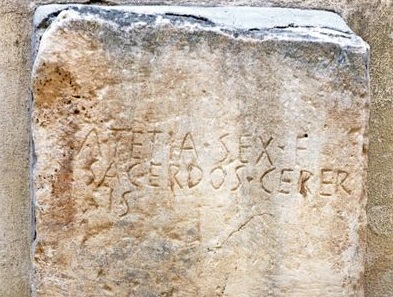
Sometimes lunchtime conversations in the department are the best way to think about something from a new perspective, because everyone brings such different experience to the same question. This week I had a great conversation with my colleagues Richard Flower and Katharine Earnshaw about the connotations of the Latin word sacerdos. We all started out with... Continue Reading →
Talk: Women’s inscribed dedications in the Veneto, 600-50 BC
Next week, I'm presenting at the conference Parole per gli dei: dediche religiose in lingue epicoriche nel Mediterraneo Occidentale [Words for the gods: religious dedications in epichoric languages in the Western Mediterranean] at the Academia Belgica in Rome. I'm thrilled to be included in this conference which includes such an international range of scholars. Here is my... Continue Reading →
Reblogged: The Partial Historians
The Partial Historians podcast uses Roman historical sources to discuss the founding of Rome and the city's early history. This week, they use accounts by Dionysius of Halicarnassus and Livy to talk about the Roman relationship with their Oscan-speaking neighbours in the fifth century BC. I love the style of this podcast - their close... Continue Reading →
Talk: Writing women
At 5pm on the 26th April, I will be presenting at the Newcastle Classics research seminar on "Writing women: understanding the goddess Reitia". I'll be talking about my recent work on literacy and the dedications to the goddess Reitia at Este, which I've spoken about already in Exeter. The seminar will take place in Room 2.50... Continue Reading →