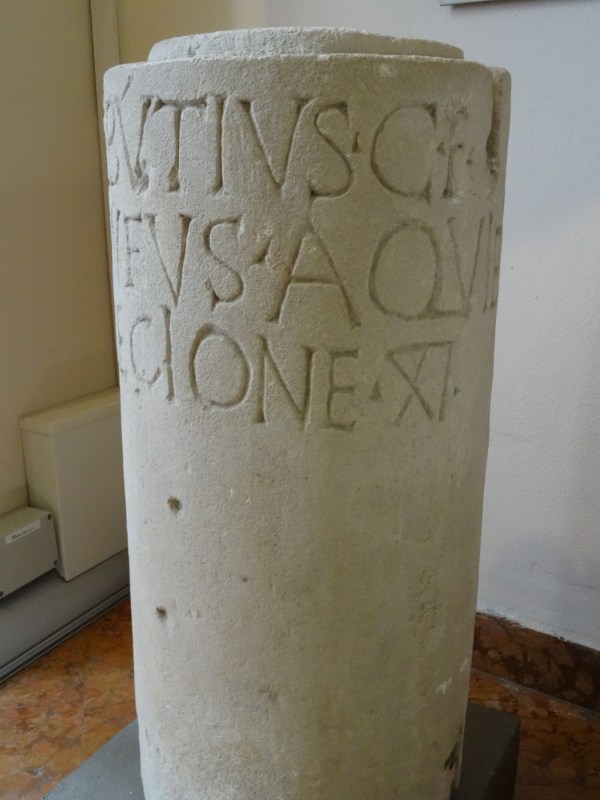
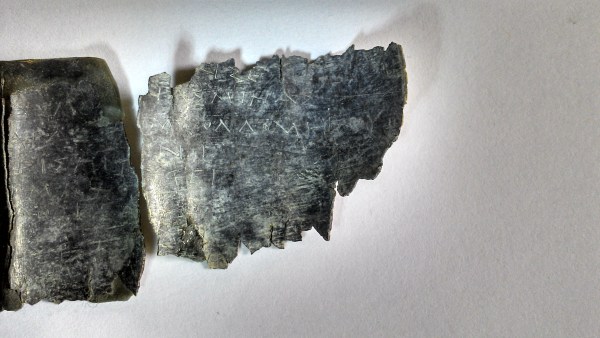
From 24th October to 4th February, the Fitzwilliam Museum and the Museum of Classical Archaeology are putting on a joint exhibition called Codebreakers and groundbreakers. The exhibition was inspired by the links between linguistics and codebreaking, and the links between Classical linguistics and Bletchley Park. As the Fitz puts it: A pioneering and interdisciplinary exhibition, Codebreakers and... Continue Reading →
Blog
What did the Romans really speak?
I'm very excited to announce that I have a featured article in November's History Today, out on Thursday. The title of my feature is 'Latin Lesson', and it explores the languages of the Roman empire, from its earliest history to the development of the Romance languages. It looks particularly at the Romans' attitudes to other languages,... Continue Reading →
ICS ECR day
A few days ago, I facilitated an event organised by Ellie Mackin Roberts (I want to be clear: she definitely did most of the work!) at the Institute of Classical Studies in London, designed around helping early-career Classicists navigate academia beyond their PhD. The morning focused on publishing and the REF, and the afternoon was... Continue Reading →
Creating Orthographies for Endangered Languages
It's always nice to receive a new publication in the post! The book Creating Orthographies for Endangered Languages, edited by Mari C. Jones and Damien Mooney, is an edited volume arising in part from Mari's work with the Cambridge Endangered Languages and Cultures Group and its associated Cambridge Conferences on Language Endangerment. I always enjoy conferences which... Continue Reading →
How I spent my time this year
On the first of September, I celebrated my first anniversary of starting work at the University of Exeter. It's been a great year, and I've learned a lot - but I was also interested to see how I'd spent my time this year. Some of you might know that I track how I spend my... Continue Reading →
Casualisation and Classics
Back in March, I asked many of you to fill in a survey for my PCAP essay on casualisation and employment in Classics in the UK. I'm pleased to say that an expanded version of this report has been published by the Council of UK Classics Departments Bulletin. It can be found online here. Please feel... Continue Reading →
Reblogged: The epigraphic gallery of the Museo Archeologico Nazionale in Naples is now open!
This recent post by my 'Greek in Italy' colleague Nick Zair shares the (very exciting!) news that the epigraphy room of the Museo Archeologico Nazionale is open for business again. To give some context to this, I've visited this room about three times. The first time was in 2009, when I was told it was closed... Continue Reading →
What links a drinking cup, Julius Caesar and ancient multilingualism?
Today I've been working on a piece on very short inscriptions - so short that we're not even sure what language they are in. There are some obvious reasons why very short, abbreviated inscriptions are sometimes used. On a coin or a tile stamp, space can be so limited that an abbreviation of the name... Continue Reading →
My PCAP bibliography
Fellowship (or associate fellowship) of the Higher Education Authority is now a requirement for many people working in higher education. I've done two applications to the HEA over the past two years - last year, to be accredited as an Associate Fellow through a Cambridge programme called TAP, and then this year to get a... Continue Reading →
How I draw inscriptions
First of all - happy second birthday, blog! The blog is now regularly getting 2000 readers a month which - let's be honest - is a lot more people than have read my book in the same period, and that's why I love blogging. It's been great to publish my work in different ways and... Continue Reading →