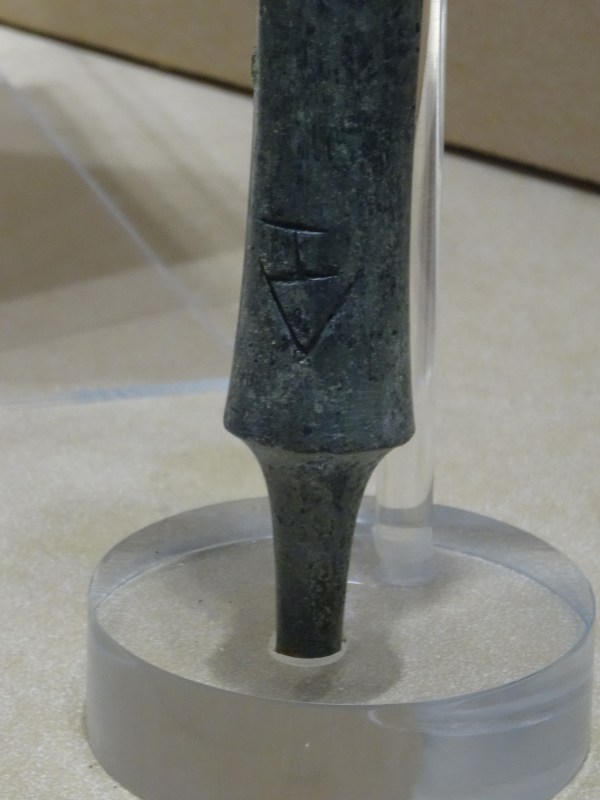
Today's inscription is a fantastic example of linguists getting a huge amount of information about ancient societies out of very short texts. How short? Well, about two letters actually. Buxentum 2 (c. 300 BC) reads <ΔΗ>, or <DE> to transcribe it into the Roman alphabet. The two letters are joined by one of their lines, to make... Continue Reading →
Corfinium – Italia or Italica?
Over the Easter holidays, I've been reading Mary Beard's SPQR, which I highly recommend. I was particularly pleased that so much of it focusses on early Rome and its relationship with Italy - it was at least a third of the way through before we even got to Sulla. Mary, as usual, brings out all... Continue Reading →
Plautus and plavtad
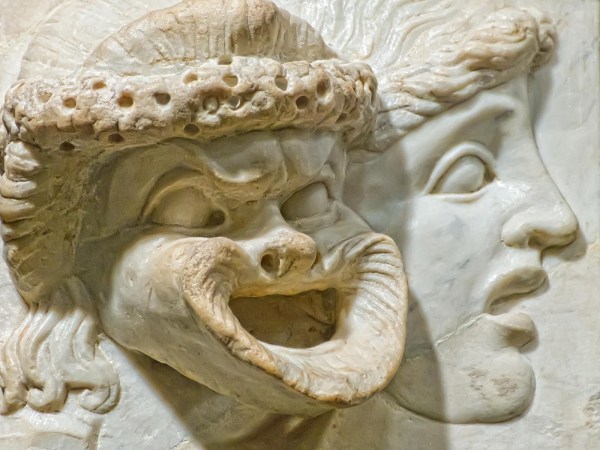
Here's a nice post by Matteo Calabrese on the meaning behind the name of the Roman dramatist Plautus, with a reference back to the post I wrote on the Pietrabbondante tile in January. If you were wondering, his name is derived from a nickname meaning "flat-footed" - but as far as I know, we can... Continue Reading →
I, Sicily
I've recently started on a very exciting new collaboration with the I.Sicily project, which is building a fully searchable, freely available online corpus of the inscriptions of Sicily. (In my head I keep turning this project into "I, Sicily" in the manner of "I, Claudius" - this sounds quite dramatic, so I'm sticking with it.) To... Continue Reading →
Dedication to Mefitis
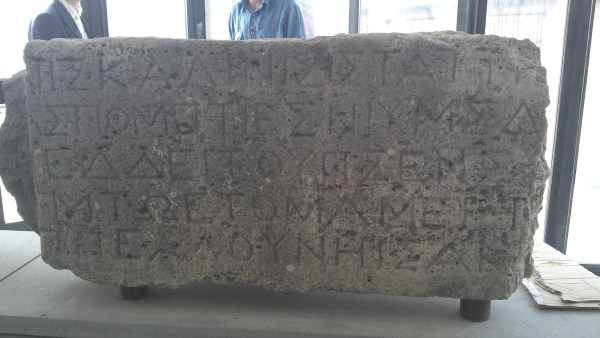
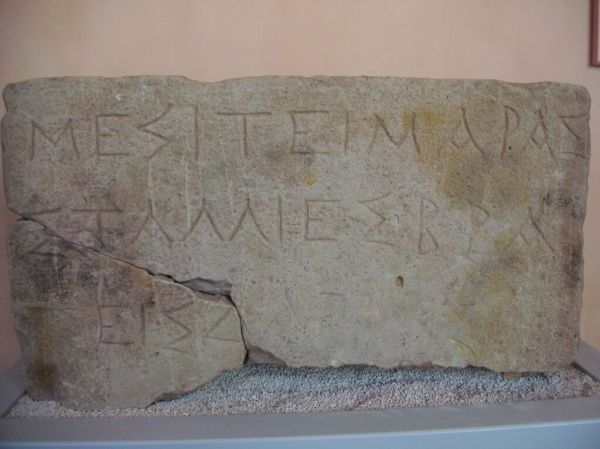
μεfιτει μαρασ σταλλιεσ βρα τεισ δατ[α]σ To Mefitis, Maras Stallies, for grace given Oscan inscription in the Greek alphabet. Rossano di Vaglio, 325-275 BC. Imagines Italicae: Potentia 13; Sabellische Texte Lu 16. This is an inscription on stone, found at the sanctuary site of Rossano di Vaglio (pictured below) in central Lucania, modern day... Continue Reading →
From Oscan hirpus to English hearse
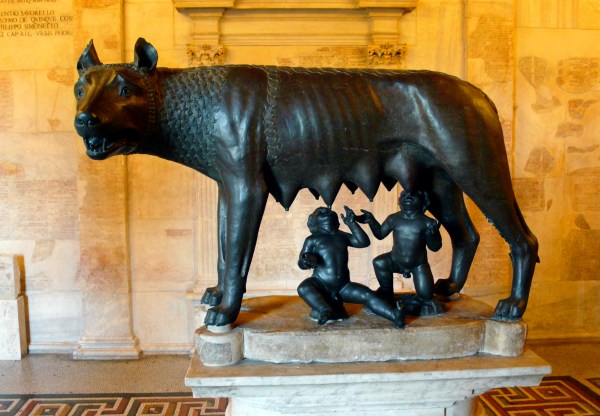
Myriapod Productions have released a rather lovely video in their "Mysteries of Vernacular" series tracing the etymology of the English word hearse back to the Oscan word hirpus, 'wolf'. (This was discovered and sent to me by my friend Julia, so many thanks to her! I have included some pictures of coins below, because she likes coins.) This... Continue Reading →
Four footprints, two languages, one tile
hn. sattiieis. detfri segnatted. plavtad herennis. amica signauit. qando. a- ponebamus. tegila(m) Detfri of Hn. Sattis signed with a footprint. Amica of Herens signed when we were laying out the tile. Oscan/Latin inscription and four shoe prints on a large clay roof tile (0.67 x 0.94m). Pietrabbondante, c. 100 BC. Imagines Italicae: Teruentum 25;... Continue Reading →
Oscan in Early Modern Italy
One of my favourite things about studying an unusual language is that your research is very memorable. Once people associate you with a particular obscure language, they will immediately think of you whenever they hear about it elsewhere. And - even better - they will send you sources that you never could have found otherwise.... Continue Reading →
Was there non-Roman literature in Ancient Italy?
Fairly regularly, someone will ask me: was there Oscan (or Venetic or Etruscan or South Picene) literature? Or, sometimes a bit more aggressively, someone asserts that there definitely wasn’t an Oscan literary culture and therefore that Oscan-speakers and their societies were just less advanced than the Greeks and/or Romans. It's not that I think this... Continue Reading →
“Oscan in Southern Italy and Sicily” is out this week
I'm very excited to announce the publication of my book Oscan in Southern Italy and Sicily. The editor very kindly dropped the first copy round to my house last night, and I'm really pleased with how it has turned out. This book started life as my PhD thesis (pictures of its journey from thesis to book... Continue Reading →