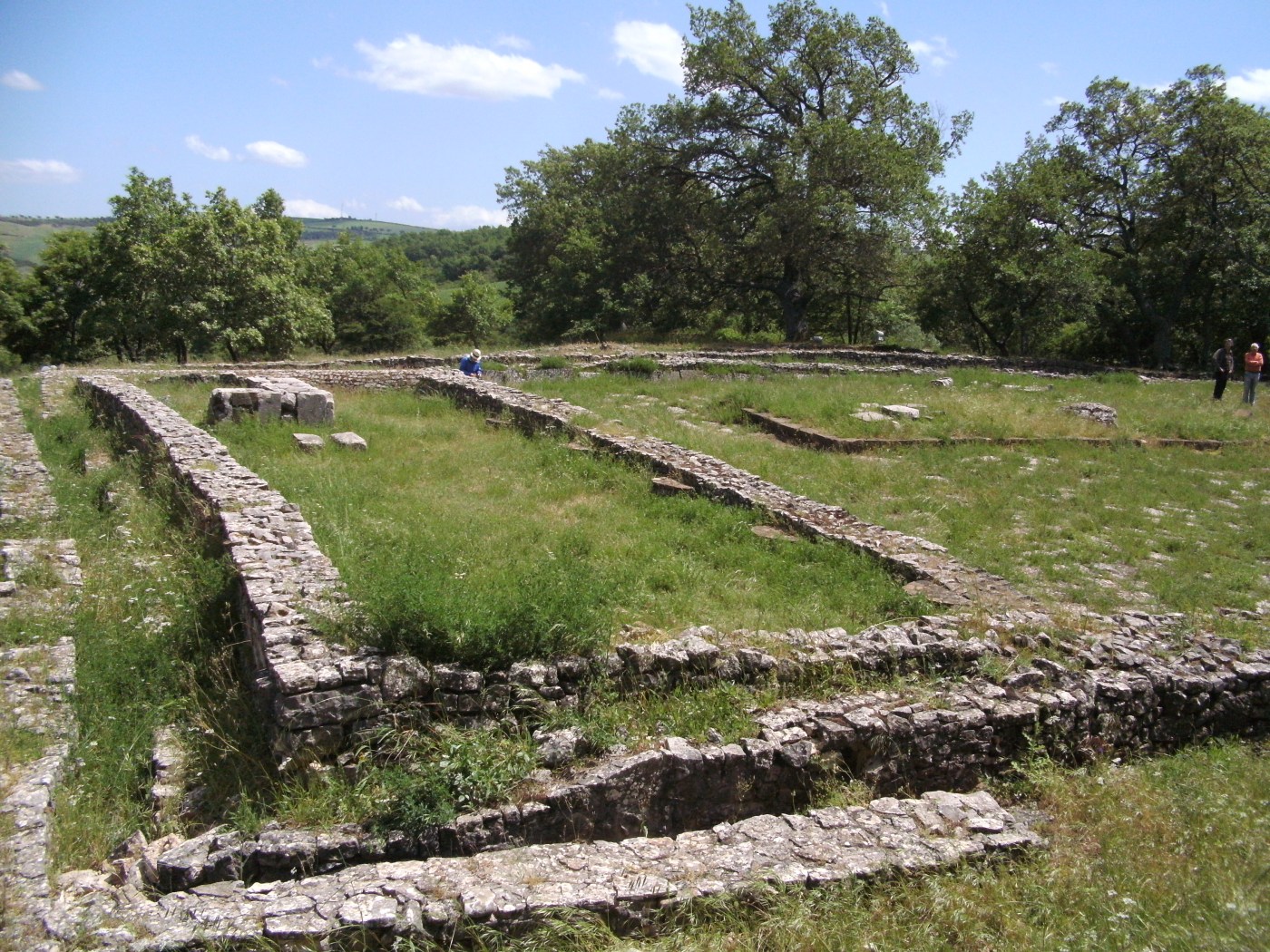
I’m very excited to be able to flag the publication of Oscan inscriptions (this does not happen every day, or even every year). In 2024, there was big new find of five new inscriptions in the Greek alphabet at the Rossano di Vaglio sanctuary in Basilicata. Considering the site only has about sixty inscriptions total, this is incredible news. The inscriptions have been published by the excavator, Dan Diffendale, who reached out to me to let me know the details in autumn 2025. The photos and texts of the inscriptions can be found in the original publication (in Italian), linked above.
One of the very exciting things that he notes is that several of the inscriptions are (almost certainly) in their original positions. This is very unusual at Rossano, where most of the inscriptions were moved or built into modern walls and other structures after the site ceased to be used in the Roman period. So not only are the inscriptions new documents, they may be able to tell us a bit more about how inscriptions were placed and viewed at the site.
I think my favourite of the new inscriptions is the longest one, which has been published as follows:
νιμζις· σαδιριιες· νιμ / κϝαιστορ· ρεστοf {ααα} / αfααματτεδ
“Nimsis Sadiries, (figlio di) Nimsis, quaestor, ha fatto fare i restauri(?)”
“Nimsis Sadiries, (son of) Nimsis, quaestor, had the restorations (?) done”
This inscription follows a model which is quite common at several Oscan sites, starting with the name of a magistrate and stating their contribution to the site, whether it was a dedication or a new building. In this case, the contribution seems to be related to a new word – ρεστοf. So our understanding of the inscription hinges on our interpretation of this word, which is otherwise unknown in Oscan.
Another nice feature of this inscription is the name νιμζις. Although this appears to be a common Oscan praenomen, Niumsis, this is a previously unknown spelling. These kind of spelling variations are the kinds of things that help us home in on how words were pronounced in different areas at different times.
More on all this, hopefully, another time. Until then, you can read all about the inscriptions in the team’s publication, which is open access and freely available.

 Katherine McDonald
Leave a comment